
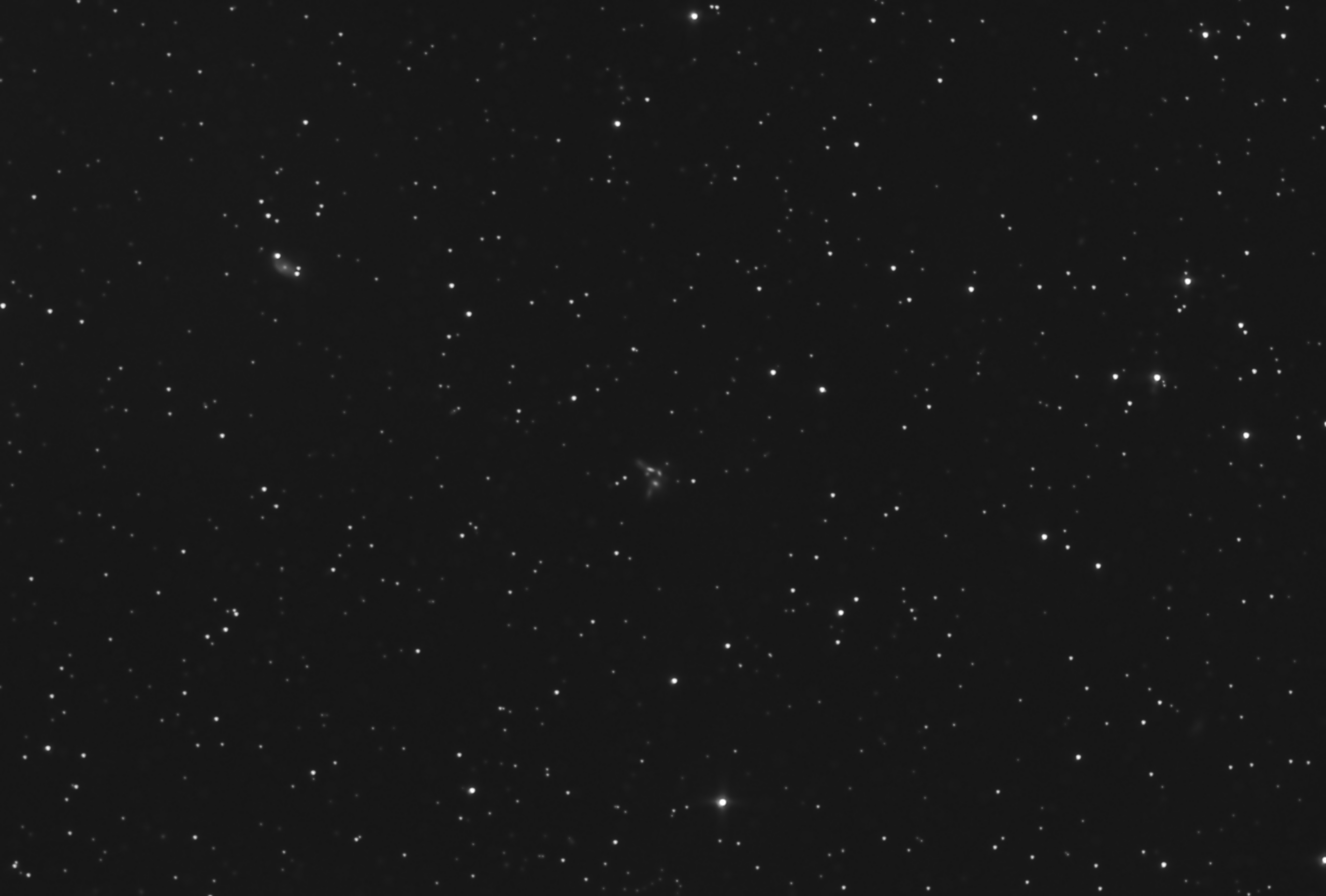
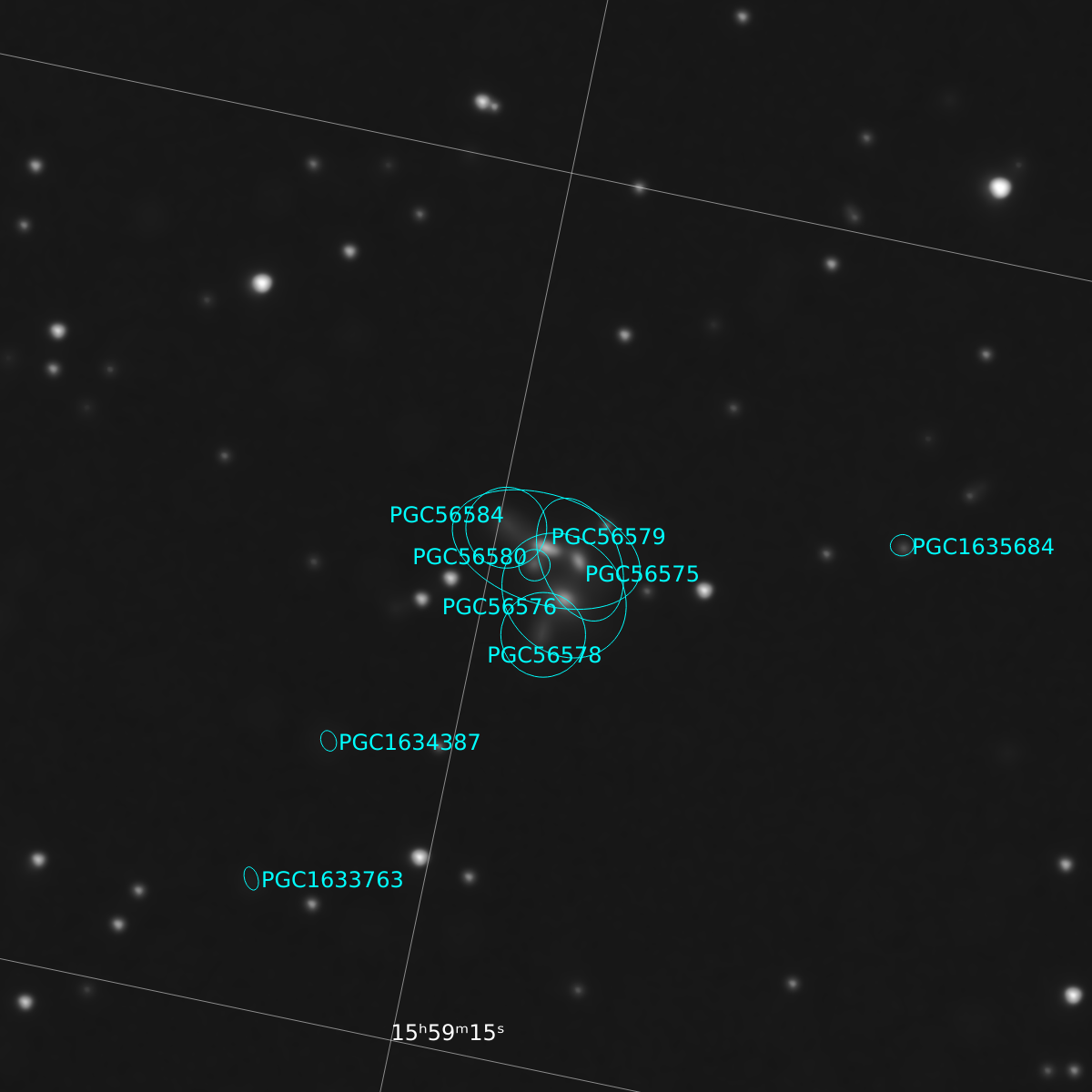
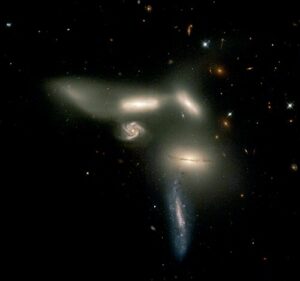
In the constellation of Serpens (Serpens Caput), approximately 190 million light-years away, lies NGC 6027, visible at the centre of the image, also catalogued as HCG 79 in Hickson’s compact group catalogue and commonly known as Seyfert’s Sextet: one of the most densely packed galaxy groups observable in the universe.
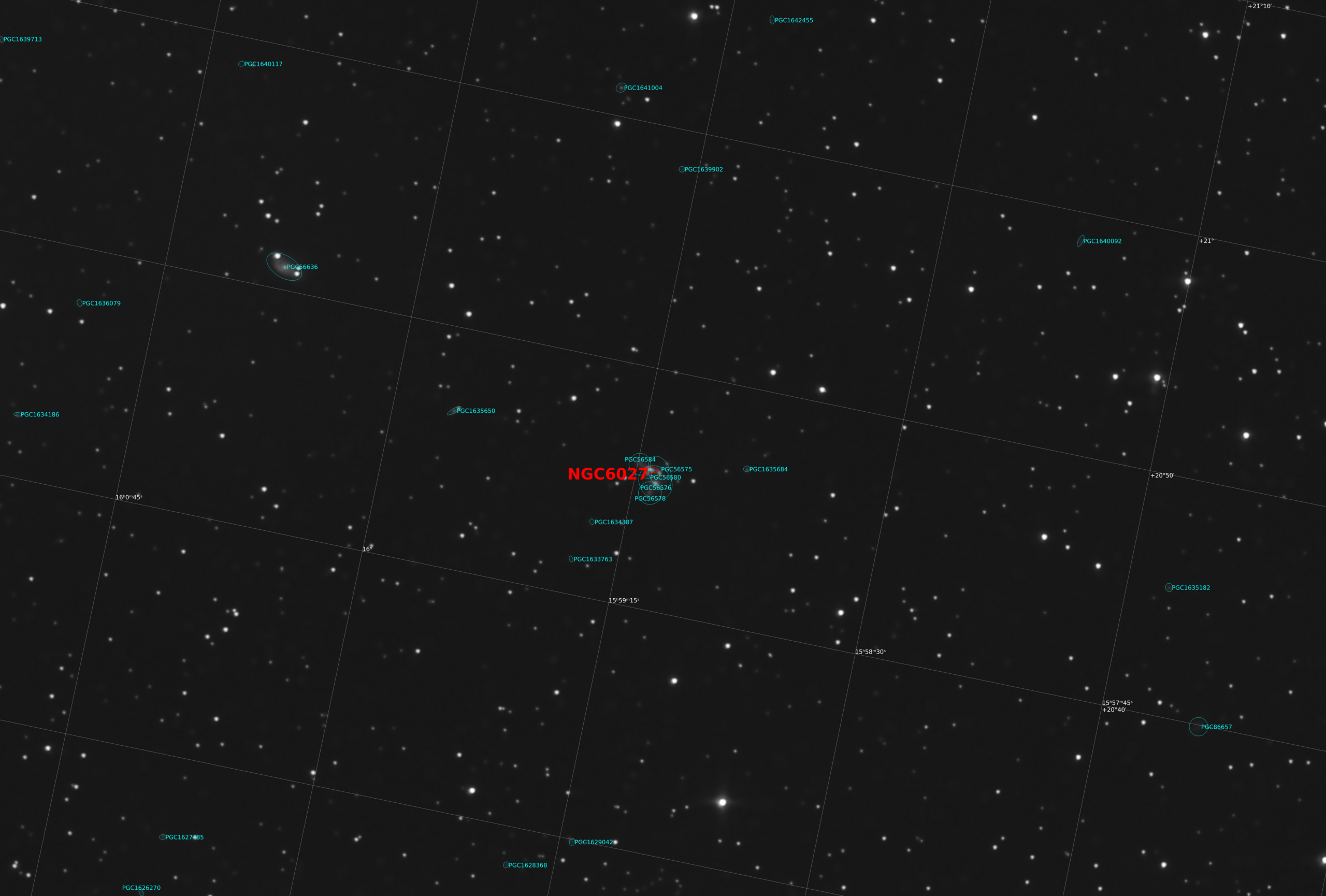
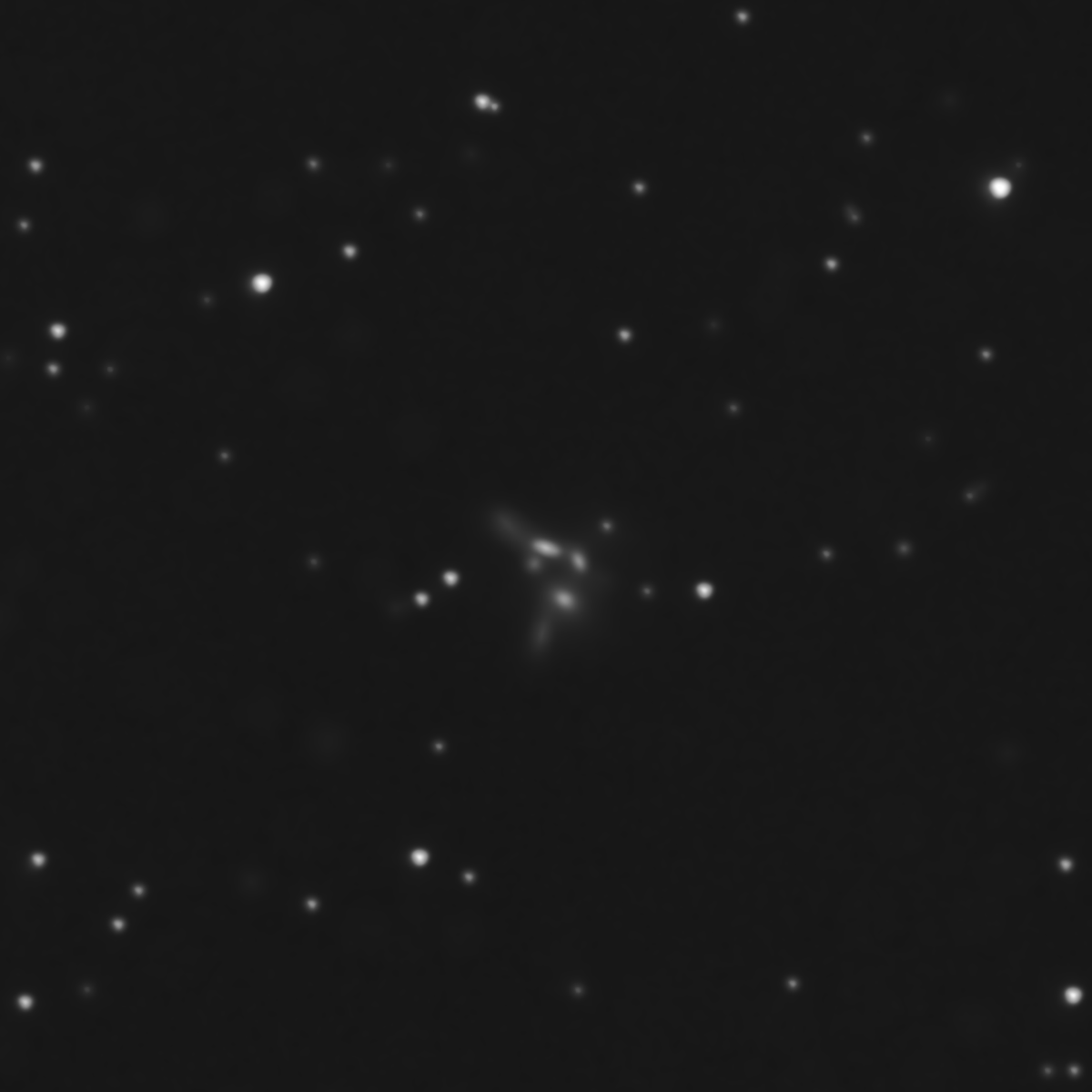
The name suggests six components, but the reality is more complex: only four galaxies are physically bound and mutually interacting, namely PGC 56575, PGC 56576, PGC 56584 and PGC 56578.
What at first glance appears to be a fifth member, PGC 56580, is in fact a barred spiral entirely unrelated to the group, located approximately 877 million light-years away and merely projected along the same line of sight by chance.
The sixth supposed member, PGC 56579, is not an independent galaxy at all: it is a tidal tail of stars stripped from PGC 56575 by the violent gravitational interactions that govern the life of this remarkable system.
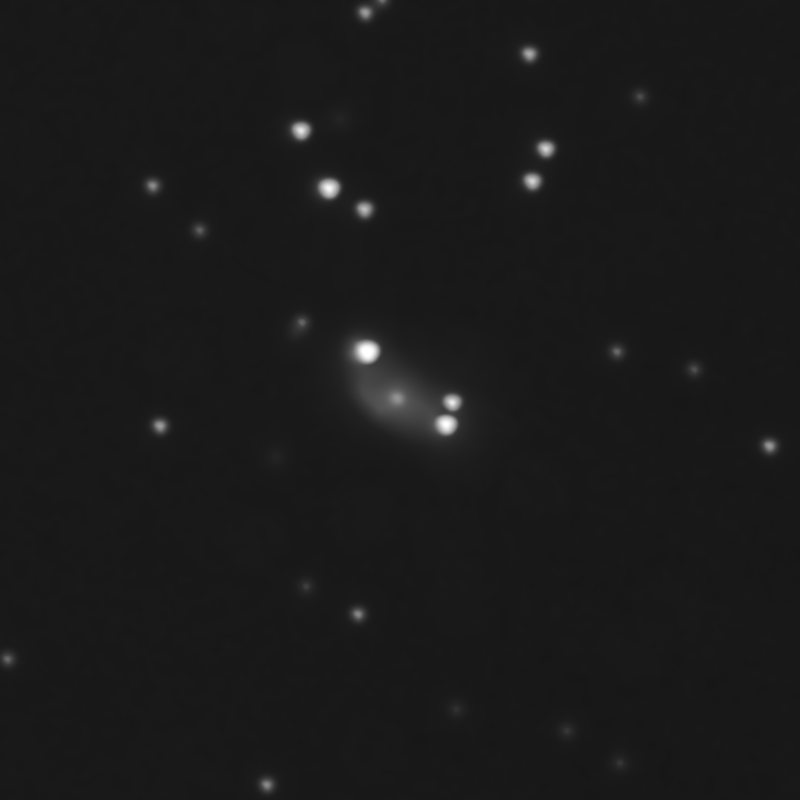
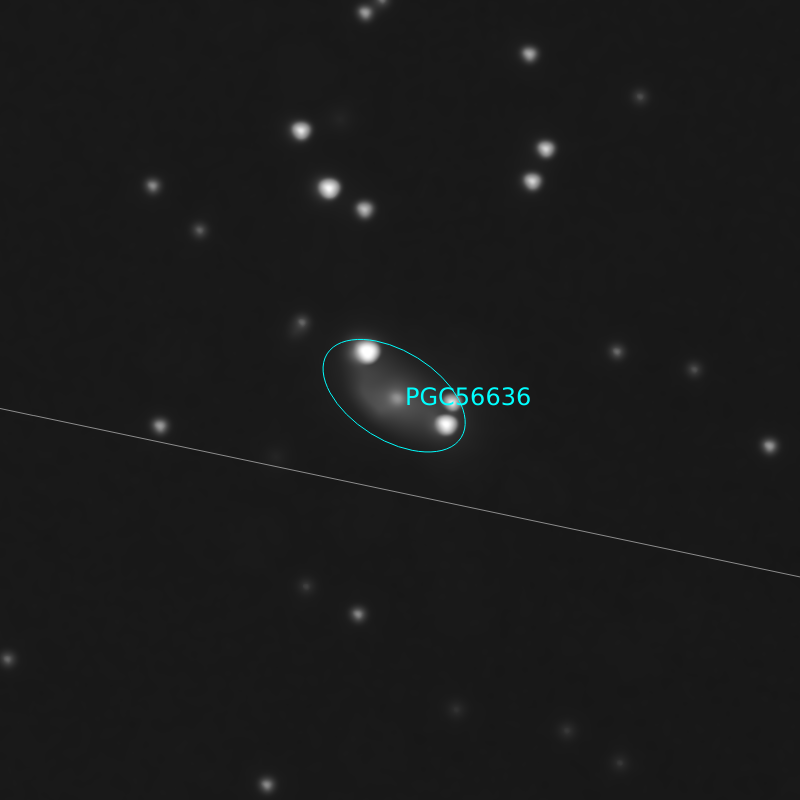
In the upper left, PGC 56636 is visible, a ring galaxy in the constellation of Serpens, approximately 72 megaparsecs from Earth, corresponding to 236 million light-years.
The light we observe today began its journey during the Middle Triassic, when the continents were still merged into the single supercontinent Pangaea and the first dinosaurs were only just making their appearance on the terrestrial scene.
Leave a Reply